
Unlocking the White Gold (Cassava)
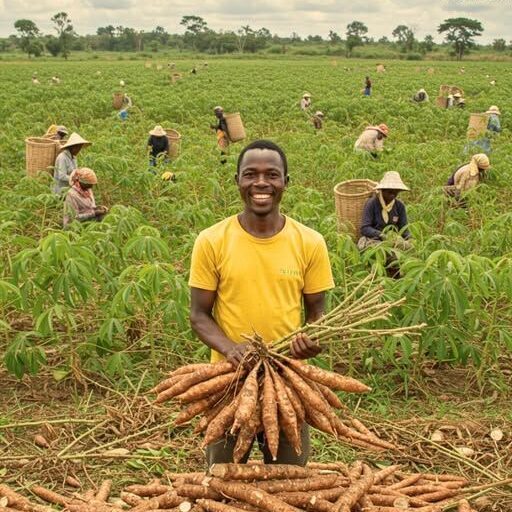
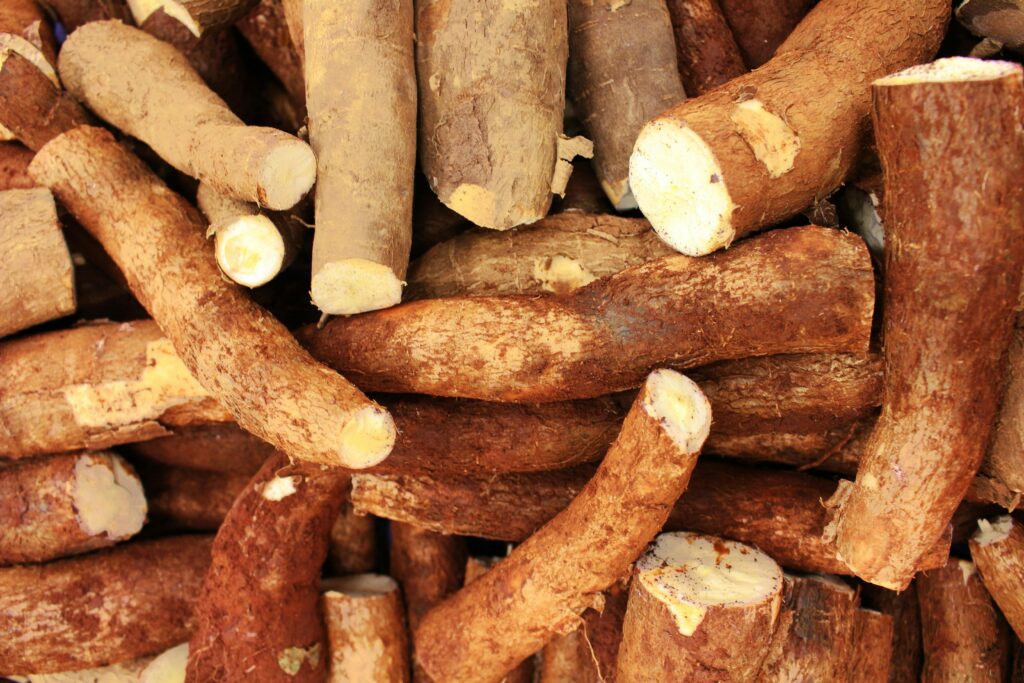
Cassava is often called the “crop of poverty,” yet its industrial potential is immense. GEAIFEC S.A.’s 10,000 10,000-hectare cassava Industrialization project redefines this versatile crop. This initiative elevates cassava from a subsistence staple to a high-value industrial input. By dedicating a significant and concentrated land area to its cultivation, GEAIFEC ensures the consistent, reliable supply needed for large-scale processing. This project is central to our strategy of leveraging local resources for global industrial value chains.
The Versatility of Cassava: A Multi-Industry Input
The strategic importance of the 10,000-hectare Cassava Industrialization project lies in its diverse uses. Specifically, cassava’s high starch content makes it a foundational raw material for several high-demand sectors, generating multiple revenue streams from a single crop.
Industrial Value Addition
Unlike traditional farming that sells raw tubers, GEAIFEC’s integrated model focuses entirely on transformation. Our on-site processing units convert the fresh harvest into high-specification intermediate products:
- High-Quality Starch: Essential for the textile, paper, pharmaceutical, and adhesive industries. This substitutes costly imports and boosts local manufacturing.
- Ethanol and Biofuels: Cassava starch can be fermented into industrial-grade alcohol, supporting the transition to sustainable energy sources.
- Cassava Flour: A gluten-free flour used in baking and food processing, catering to growing domestic and international dietary demands.
- Animal Feed: Cassava pulp and peels, often considered waste, are processed into nutrient-rich components for livestock feed.
Thus, every hectare planted contributes to multiple value chains, maximizing economic impact.
Technology and Sustainability in Cassava Cultivation
Managing 10,000 hectares of cassava requires precision and sustainable practices to maintain soil health and genetic quality. Therefore, the Research and Innovation (R&I) Centers play a pivotal role in this project.
Optimizing Genetics and Yield
Our R&I teams focus on propagating improved cassava varieties. Furthermore, these varieties offer higher starch yields and superior disease resistance. This genetic work ensures the industrial feedstock is consistent and of the highest quality required for manufacturing.
- Mechanization: We employ modern, mechanized planting and harvesting techniques tailored for large-scale cassava. This significantly reduces labor costs, improves efficiency, and minimizes tuber damage, which is critical for industrial processing.
- Closed-Loop Processing: Our industrial complexes implement closed-loop systems. Consequently, the waste produced during processing is treated and recycled. This not only reduces environmental impact but also creates a circular economy where waste materials are converted into biogas or organic fertilizers for the farm.
Economic Transformation and Local Impact
The 10,000-hectare Cassava Industrialization project creates an economic hub designed for long-term regional stability. The integration of the farm and the factory leads to specialized job creation and enhanced infrastructure.
The project generates high-value employment across two major phases:
- Agronomic Specialization: Roles in precision agriculture, land management, and technical field supervision.
- Manufacturing Expertise: Jobs in chemical processing, starch extraction, quality control, and factory management.
Finally, GEAIFEC’s cassava initiative is a powerful blueprint for industrial agriculture. It transforms an ancient crop into a modern industrial workhorse, securing local supply chains, replacing costly imports, and firmly positioning the region as a serious player in the global starch and derivatives market.